
When planning a home project, choosing the right material can shape everything from strength to long-term cost. Many homeowners struggle to understand the masonry vs concrete difference, especially when both options appear equally durable. However, a clear concrete vs masonry comparison reveals how each material performs in different conditions.
Masonry is often valued for its classic look and durability, while concrete stands out for its flexibility and speed of installation. Knowing the role of Masonry vs Concrete materials and concrete construction methods helps you make better decisions. In the end, selecting the best material for construction ensures your home remains strong, efficient, and visually appealing for years to come.
Understanding the Basic Difference Between Masonry and Concrete
At a basic level, the difference between masonry and concrete comes down to how they are built. Masonry construction materials use separate units like bricks, stones, or blocks that are joined together with mortar. In contrast, concrete construction methods involve pouring a mixture into a form where it hardens into a single solid structure. When comparing masonry vs concrete, it is important to understand how each material performs over time.
This difference directly affects performance. Masonry builds strength through layered bonding, which improves structural integrity over time. Concrete depends on its mass and reinforcement to provide strength. Both materials offer excellent construction durability, but they respond differently to stress, weather, and long-term use.
What Masonry Means in Home Construction
Masonry has been used for centuries and is still a popular choice for homes today. It involves placing bricks, stones, or concrete blocks carefully and bonding them with mortar. This method follows traditional construction methods and produces structures with high compressive strength, making it ideal for walls, facades, and decorative features.
One of the biggest advantages of masonry is its ability to regulate indoor temperature. It provides strong thermal mass and reliable insulation properties, which support energy-efficient construction. However, masonry requires skilled labor and takes more time, making it a more labor-intensive construction option compared to concrete. The choice between masonry vs concrete depends on your project goals, budget, and design preferences.
What Concrete Means in Residential Construction
Concrete is a modern material widely used in today’s construction projects. It is made by mixing cement, sand, water, and aggregates, then pouring it into molds. This flexibility makes it a key part of modern construction techniques, especially in large-scale and structural projects. Many homeowners struggle to decide between masonry vs concrete because both materials offer unique advantages.
Concrete is especially strong in load-bearing structures because it can handle heavy weights. That is why many homeowners also consider masonry services when working on structural walls, foundations, and outdoor features. When reinforced with steel, it improves tensile strength and overall structural performance. 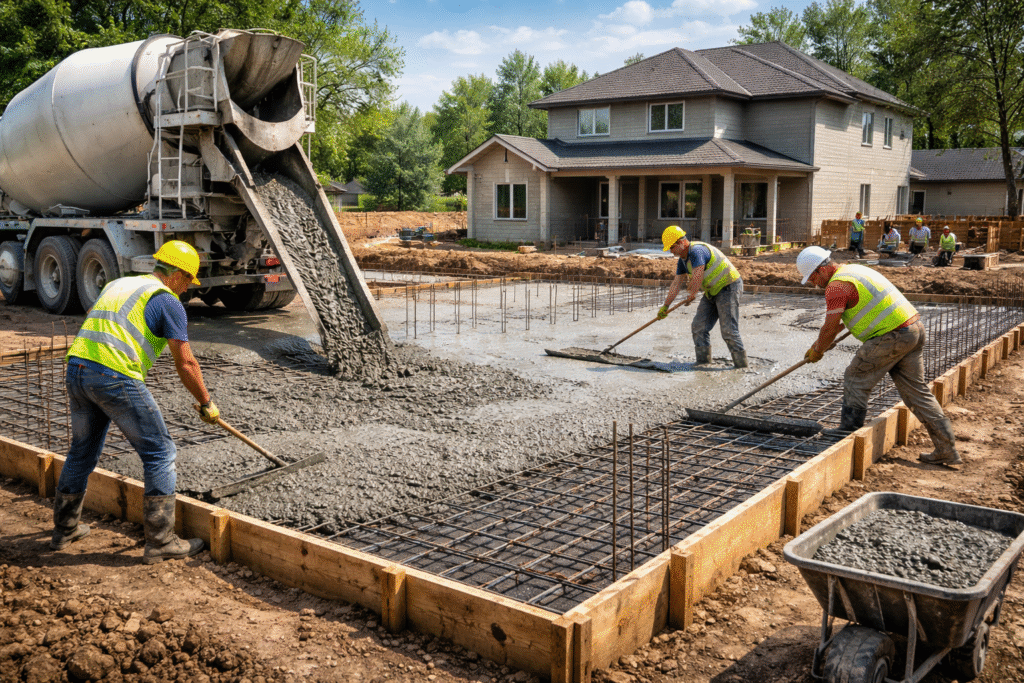
Where Masonry and Concrete Overlap in Real Projects
Although masonry and concrete are different, they often work together in construction. For example, concrete blocks are commonly used in masonry wall construction, which creates confusion for many homeowners.
This overlap also appears in decisions like concrete block vs brick, where both materials serve similar purposes but perform differently. In many projects, both materials are used together in foundation materials, combining the strengths of each for better results. A proper understanding of masonry vs concrete can help you avoid costly mistakes during construction.
Knowing When Masonry or Concrete Is the Better Choice
Choosing between masonry and concrete depends on your project needs. A clear masonry work vs concrete work comparison helps you understand which material fits your goals better. In most cases, selecting between masonry vs concrete comes down to durability and long-term maintenance.
Both materials are widely used in residential construction materials and commercial construction materials, but they serve different purposes. Masonry is often chosen for aesthetics and durability, while concrete is preferred for speed and structural strength.
Situations Where Masonry Works Best for a Home
Masonry is the best choice when you want a strong and visually appealing structure. It works well for brick walls, fireplaces, patios, and decorative facades where design plays an important role.
It also performs well in harsh conditions due to its strong weather resistance and use of fire-resistant materials. This makes masonry a reliable option for long-term projects that require both beauty and durability. Experts often recommend evaluating masonry vs concrete based on climate conditions and structural needs.
Situations Where Concrete Makes More Sense
Concrete is ideal for projects that require fast construction and high strength. It is widely used in infrastructure projects and modern homes where efficiency matters. The debate of masonry vs concrete becomes easier when you consider the type of project you are planning.
It provides excellent moisture resistance and can handle heavy loads, making it perfect for foundations, driveways, and structural elements. This makes concrete a practical choice for large and functional projects.
Comparing Masonry and Concrete Costs in Tucson
The cost of masonry vs concrete in Tucson depends on the type of project, materials, wall height, reinforcement, site access, finish, and labor involved. A block wall, retaining wall, patio, foundation, and decorative masonry project can all have very different requirements.
Concrete may be practical for slabs, footings, and other poured applications, while masonry is commonly used for block walls, privacy walls, retaining walls, and decorative features. Instead of choosing only by the lowest starting price, homeowners should compare expected maintenance, structural needs, appearance, and how the material will be used. The best option depends on the property and the purpose of the project.
How Masonry and Concrete Perform in Tucson’s Desert Climate
Tucson properties face intense sun, high summer temperatures, dry conditions, seasonal monsoon rain, and regular temperature changes between day and night. These conditions can place stress on outdoor walls, patios, foundations, and other masonry or concrete surfaces.
Both masonry and concrete can perform well in Southern Arizona when the materials, drainage, reinforcement, joints, and installation method suit the project. Cracking, movement, drainage problems, and surface wear should be evaluated based on the structure rather than assuming one material is always better. Homeowners planning repair or new construction can also review our Questions to Ask Before Hiring a Masonry Contractor before choosing a contractor.

Common Homeowner Questions About Masonry and Concrete
Many homeowners face confusion when dealing with repairs or upgrades. For example, a crumbling brick wall does not always mean the entire structure needs replacement. Often, repairing the mortar joints can restore strength.
Another common situation is when concrete steps have a brick surface. In most cases, the structure is concrete, and the brick is only decorative. Understanding these details helps homeowners make better decisions and avoid unnecessary costs. The difference between masonry vs concrete is not just about cost, but also about strength and performance.
How to Choose the Right Contractor for Masonry or Concrete Work
The success of your project depends heavily on the contractor you choose. A skilled contractor understands both masonry and concrete systems and knows how to apply them correctly. A clear comparison of masonry vs concrete can improve both the quality and lifespan of your structure.
Before hiring, always check experience, previous work, and communication. A reliable professional will explain the process clearly and help you choose the right material for your needs, whether it involves general masonry or Chimney Masonry in Tucson for long-term durability and safety.
Masonry vs. Concrete: Which Material Offers More Strength and Flexibility?
Both masonry and concrete are strong materials, but they perform differently. Masonry offers high compressive strength, while concrete becomes stronger when reinforced with steel. Concrete provides more flexibility because it can be molded into different shapes. Masonry focuses more on structure and appearance, making it ideal for traditional designs.
Final Thoughts on Masonry vs. Concrete for Your Home
Understanding the real masonry vs concrete difference helps you make smarter decisions for your home. Both materials have their strengths, and each is suited for different types of projects. Before making a final decision, always review the benefits of masonry vs concrete carefully.
The key is to match the material with your needs, budget, and long-term goals. Whether you choose masonry for its timeless beauty or concrete for its strength and efficiency, making the right decision ensures your home remains safe, durable, and valuable for years to come.