
Arizona is not a forgiving place for walls. Between the scorching summers, violent monsoons, and shifting desert soil, your choice of building material matters more here than almost anywhere else in the country. CMU and brick are both proven masonry options, but they perform very differently in the Arizona climate.
Whethe CMU vs brick you are building a boundary wall, a new home, or a full structural system, understanding the real difference between these two materials can save you thousands of dollars and years of frustration. This guide breaks it all down honestly.
Before going further, take a moment to explore our Masonry Services in Tucson, Built for Desert Conditions, and see how the right material, paired with the right team, changes everything.
What Actually Drives the Cost?
Cost is never just about picking a block or a brick. Several factors come together to shape your final number, and knowing them up front puts you in a much stronger position before you ever talk to a contractor.
Material Type Makes a Big Difference
Clay brick costs more per unit but brings lasting beauty and a durability record that speaks for itself. CMU block costs less up front and increases faster, making it attractive when budget and speed both matter.
But the real price story goes deeper than the unit cost. Double wythe brick systems need more labor and more material. Veneer systems, brick, or CMU vs brick still require proper backing, metal ties, and moisture control throughout. In Arizona’s climate, cutting corners on any of that leads to cracks and failures that cost far more to fix than they ever would have cost to prevent.
Wall Location Changes Everything
CMU vs brick Not every wall carries the same level of complexity or price tag.
- Boundary walls are the simplest and most affordable
- Load-bearing walls need engineering and reinforcement
- Retaining walls are the most expensive and require drainage integration
Retaining walls in Arizona almost always involve rebar, engineered drainage, and detailed design work. Get the drainage wrong, and the problem recurs regardless of the material you choose.
How Size Affects Your Budget
Wall area drives cost in a very direct way. CMU vs brick Contractors price by linear foot or square foot, and those numbers climb fast once demolition or foundation work enters the picture.
A small repair stays manageable. A long structural system or full boundary rebuild is a different conversation entirely. What looks simple on the surface sometimes hides deeper drainage or structural issues underneath, and those discoveries affect both price and timeline in ways no online estimate can predict.
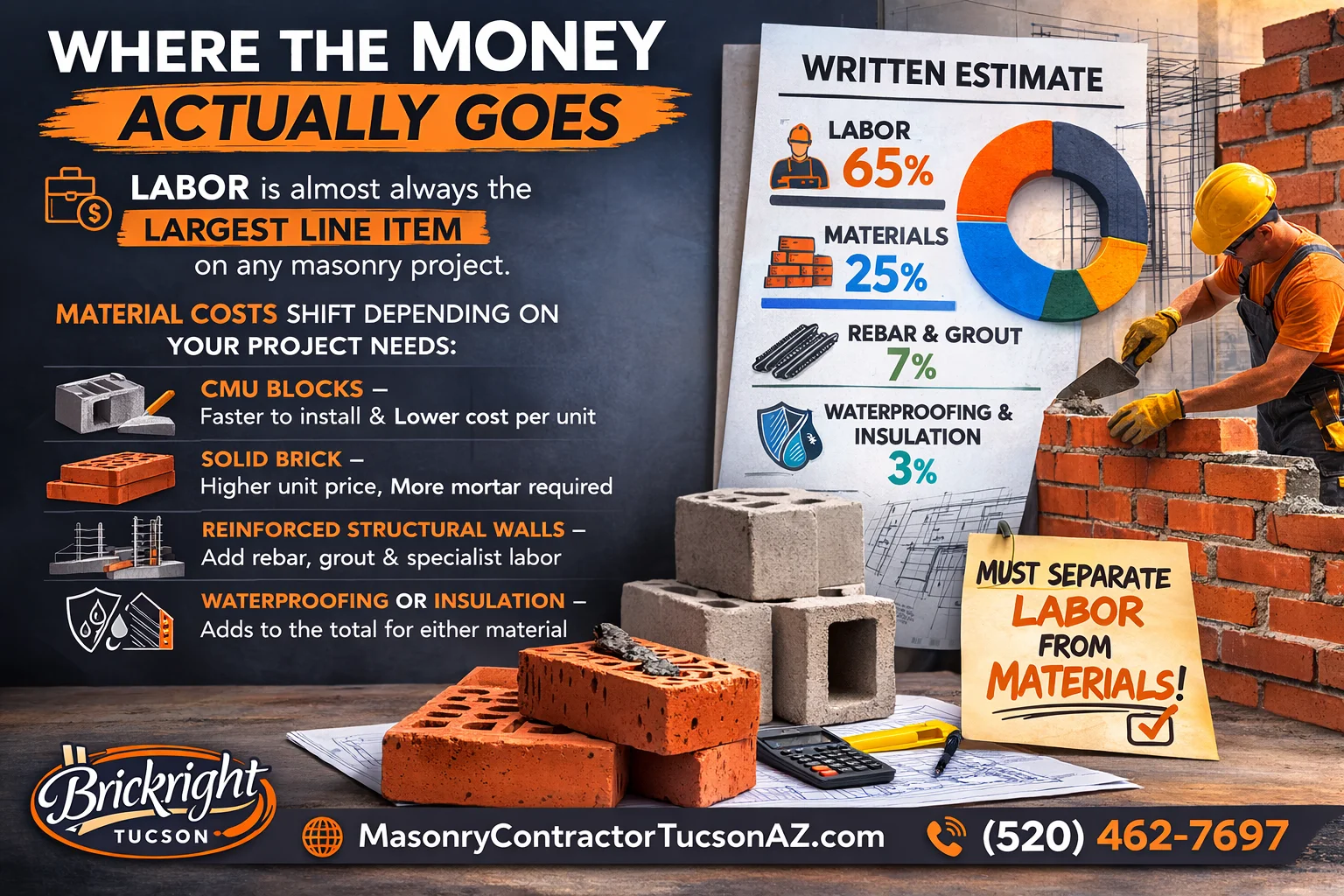
Where the Money Actually Goes
Labor is almost always the largest line item on any masonry project. Skilled Arizona masons charge based on experience, wall complexity, and time, and rightfully so.
Material costs shift depending on what your project needs:
- CMU blocks are faster to install and have a lower cost per unit
- Solid brick higher unit price, more mortar is required
- Reinforced structural walls add rebar, grout, and specialist labor
- Waterproofing or insulation adds to the total for either material
Any contractor worth hiring will provide a written estimate that clearly separates labor from materials. If they will not do that, keep looking.
When Full Replacement Makes More Sense
Sometimes the smartest thing a contractor tells you is to stop patching and rebuild. If your wall keeps cracking in the same places, has been repaired multiple times without lasting results, or shows real structural compromise, a clean rebuild with the right material almost always costs less over time than repeated temporary fixes.
A proper onsite inspection is the only honest way to know which path makes sense for your specific wall.
What Does It Actually Cost in Arizona?
Here is a realistic breakdown of what most Arizona property owners pay:
- Minor repairs $250 to $800
- Midrange repairs or builds $800 to $2,000
- Structural or engineered wall systems $2,000 to $5,000 and beyond
Final price depends on wall height and length, site access, structural requirements, drainage design, and soil conditions. No two properties are the same, and no two project costs will be either.
How Arizona’s Climate Tests Every Wall
Arizona does not go easy on masonry. Heat expands materials during the day. Cooler nights contract them again. That daily thermal cycle quietly weakens mortar joints and opens cracks in both brick and CMU systems over time, especially when the original installation was not built to handle it.
Thermal performance is a genuine factor in Arizona summers. Brick naturally absorbs heat and releases it slowly, which helps moderate indoor temperatures. CMU vs brick filled with insulation can match that performance in larger residential and commercial builds where energy efficiency directly affects monthly costs.
Then the monsoon season arrives. Heavy rainfall saturates the soil quickly, loading retaining and foundation walls with sudden pressure. Moisture resistance matters here, and both materials perform well when installed correctly. The quality of the workmanship and the drainage design behind the wall make a bigger difference than the material itself.
Neither brick nor CMU is bulletproof in Arizona. Annual inspections, especially after summer heat waves and the monsoon season, catch small problems before they become expensive structural repairs.
DIY or Call a Professional?
Minor surface maintenance on a stable wall is something many homeowners handle themselves. Anything structural is a different matter entirely and should always involve a licensed professional.
When You Can Handle It Yourself
- Hairline crack filling on a straight, stable wall
- Small mortar joint repairs
- Basic surface patching with no signs of movement
If the wall is not shifting and cracks are not widening, routine DIY maintenance is a reasonable and cost-effective approach.
When You Need a Professional
- Horizontal cracking anywhere on the wall
- Repeated failures in the same location
- Any visible bowing, leaning, or structural movement
Retaining walls and load-bearing systems are never DIY territory. Soil pressure, drainage failure, and structural instability require engineered solutions and attempting them without experience creates risks that go well beyond the cost of hiring a professional in the first place.
How to Get an Estimate You Can Actually Trust
Online averages give you a starting point. They cannot evaluate your wall, your soil, or your site. The only number worth trusting comes from a contractor who has actually stood on your property and looked at what is there.
During a proper site inspection, a qualified mason will look at:
- Wall height, length, and overall condition
- Crack patterns: width, direction, and location
- Signs of leaning, bowing, or settlement
- Moisture damage or drainage failures
- Soil movement at the base
From that evaluation comes a clear recommendation to repair, reinforce, or replace, along with transparent pricing.
Before you sign anything, ask every contractor:
- Are you licensed and insured in Arizona?
- Will you provide a written itemized estimate?
- Is there a workmanship warranty on the completed work?
Getting multiple written quotes is not about being difficult. It is about making a smart decision with your money.
Simple Steps to Protect Your Wall LongTerm
Most major masonry repairs start as small problems that were ignored for too long. A little consistent attention goes a long way.
- Clear drainage systems before every monsoon season
- Direct downspouts away from wall foundations
- Inspect mortar joints once a year and fix small cracks early
- Keep large trees and deep, rooted plants away from retaining walls
- Watch for soil erosion at the wall bases after heavy rain
That is it. Annual inspections and basic upkeep consistently cost a fraction of what structural rebuilding demands.
Why a Local Arizona Contractor Changes the Outcome
A contractor who knows Tucson’s soil, understands Arizona’s monsoon patterns, and has worked through desert heat cycles brings something no out-of-town company can match: direct experience with exactly the conditions your wall faces every day.
A skilled local mason will:
- Spot soil, related structural movement patterns immediately
- Design drainage that actually works for Arizona monsoons
- Source materials proven to hold up in extreme desert heat
- Back their work with local references you can actually verify
Working locally also means faster communication, full alignment with Tucson building codes, and a contractor who genuinely understands what your project is up against.
So, Brick or CMU for Arizona?
There is no universal right answer, but there is a right answer for your project. CMU brings speed, affordability, and structural flexibility. Brick brings a timeless appearance, natural thermal mass, and a lifespan that holds its value in the Arizona market for decades.
The honest decision comes from evaluating both options against your actual requirements, your realistic budget, and your specific site, not from following a general recommendation online.
If you are ready to have that conversation with people who build for Arizona conditions every day, start with our Masonry Services in Tucson, Built for Desert Conditions and get a straight answer from a team that knows this climate firsthand.
Your wall protects your property, defines your space, and contributes to your home’s long-term value. Make the right material decision today, and it will keep paying off for years to come