
Retaining wall cost in Tucson is the first thing most homeowners search for once they spot soil shifting, slopes crumbling, or erosion creeping in after the monsoon season. Before you call anyone, you want a realistic number, and that’s exactly what this guide gives you.
We’ll cover average costs by material, what drives prices up or down, the best choices for Tucson’s desert climate, and what to look for when hiring a contractor.
What Is the Average Cost of a Retaining Wall in Tucson?
If you are comparing retaining wall cost Tucson prices, remember that simple garden walls cost less than engineered walls built to hold back heavy soil. In Tucson, professionally installed retaining walls typically cost between $25 and $75 per square foot. For a standard 20-foot wall standing 4 feet tall, most homeowners spend between $2,000 and $10,000, sometimes more for complex sites with drainage needs or engineering requirements.
Here’s a quick breakdown by material:
- Concrete retaining wall $30 to $60 per sq ft
- Natural stone retaining wall $35 to $75 per sq ft
- Cinder block retaining wall $20 to $35 per sq ft
- Interlocking retaining wall blocks cost $20 to $45 per sq ft
- Wood retaining wall/railroad tie $15 to $30 per sq ft
- Gabion retaining wall $25 to $50 per sq ft]
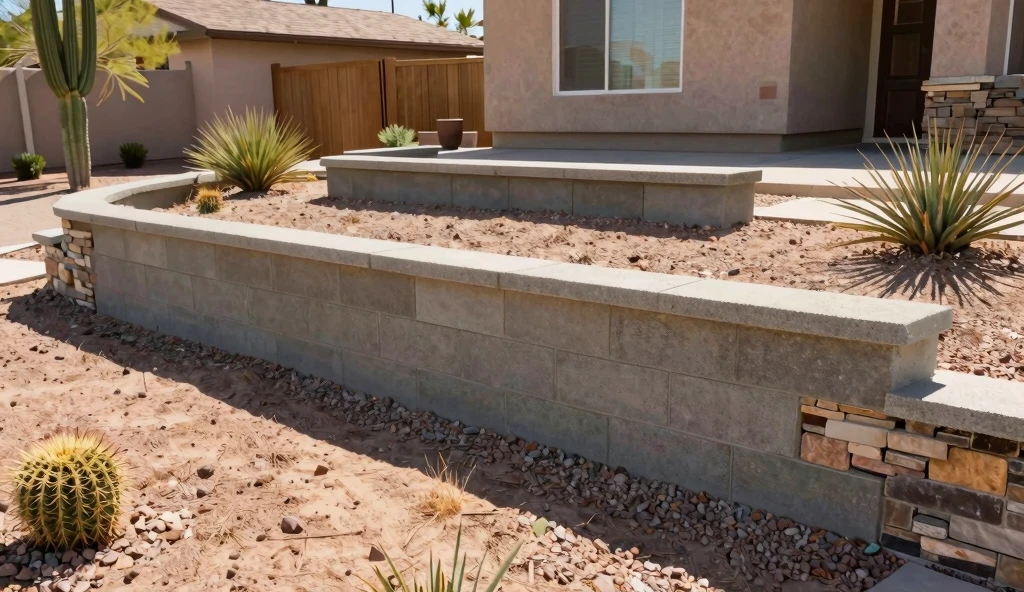
Retaining Wall Blocks: The Most Popular Choice in Tucson
Retaining wall blocks are the go-to option for most Tucson homeowners. They’re widely available, handle desert ground movement well, and work for walls of almost any size or shape.
Interlocking retaining wall blocks are especially popular because they lock together without mortar. That makes installation faster and future repairs much simpler. If you’re searching for retaining wall blocks near me, local Tucson masonry suppliers carry trusted brands like Allan Block and Versa-Lok at competitive prices.
Large retaining wall blocks are the right call for taller walls or heavier soil loads. They’re harder to move but deliver the mass and stability that bigger projects demand.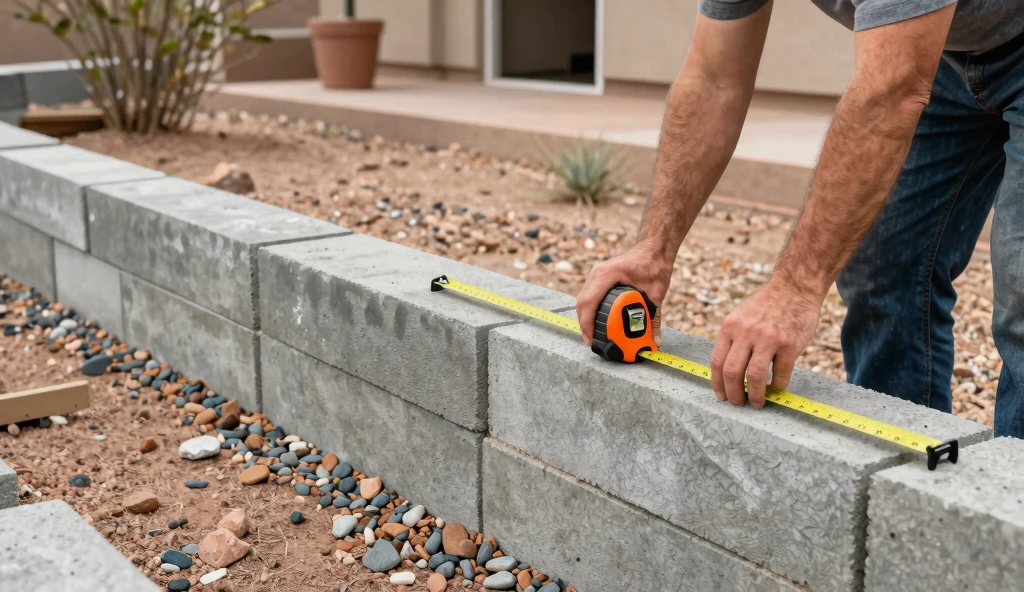
Concrete and Stone: Built to Last Decades
A concrete retaining wall is the most durable option available. Poured concrete and precast panels can easily last 50 years or more, making the higher upfront cost worthwhile on larger or more demanding projects.
A natural stone retaining wall is the best-looking choice for homes that suit Tucson’s desert landscape. Flagstone, boulders, and river rock all work beautifully here. Retaining wall bricks offer a similar aesthetic with a cleaner, more uniform finish if that suits your style better.
Wood and Gabion Walls: When They Make Sense
A wood retaining wall, or railroad-tie retaining wall, is the cheapest option upfront. For small garden borders or walls under 3 feet, it can work just fine in the short term.
The honest reality for Tucson is that wood doesn’t hold up well long-term. Intense sun, soil contact, and monsoon moisture cycles break it down faster here than in cooler climates. For anything meant to last, block, concrete, or stone is the smarter investment.
A gabion retaining wall is worth serious consideration in Tucson, specifically because of its drainage performance. The open wire-and-rock structure lets water flow freely rather than building pressure behind the wall, a real advantage during heavy monsoon rains.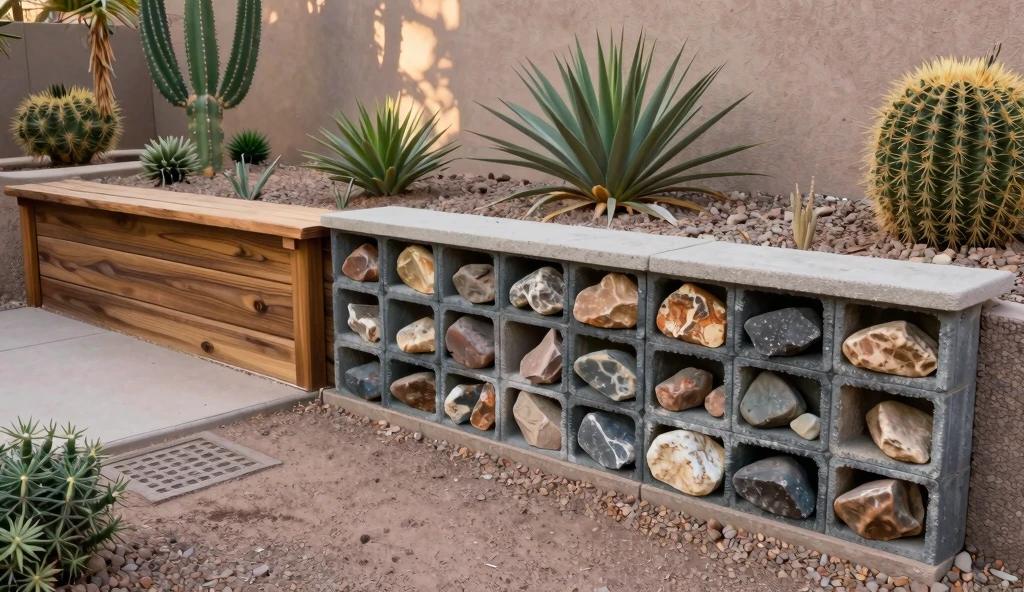
Key Factors That Affect Retaining Wall Cost in Tucson
Wall height is the biggest price driver. Walls over 4 feet require building permits in most Tucson and Pima County jurisdictions, and often need a licensed engineer’s design too. Permit fees typically run $100 to $500, and engineering adds more on top.
The biggest reason retaining wall cost Tucson estimates vary is that every yard has different soil, slope, drainage, and access conditions. Site conditions matter just as much. Steep slopes, tight access, and Tucson’s notorious caliche soil, the rock-hard calcium carbonate layer found throughout Southern Arizona, all increase excavation time and labour costs. A contractor who knows local terrain will spot these issues early and give you an honest estimate up front.
Drainage: The Detail That Determines Whether Your Wall Lasts
Drainage can raise retaining wall cost Tucson projects at first, but it often prevents expensive wall failure later. Drainage is the most overlooked part of retaining wall construction and the most important one in Tucson. Without proper drainage behind a wall, water pressure builds in the soil until something gives.
Quality installation always includes gravel backfill, perforated drain pipe at the base, and weep holes in the wall face. Skipping this to save money almost always leads to early wall failure and far greater repair costs later.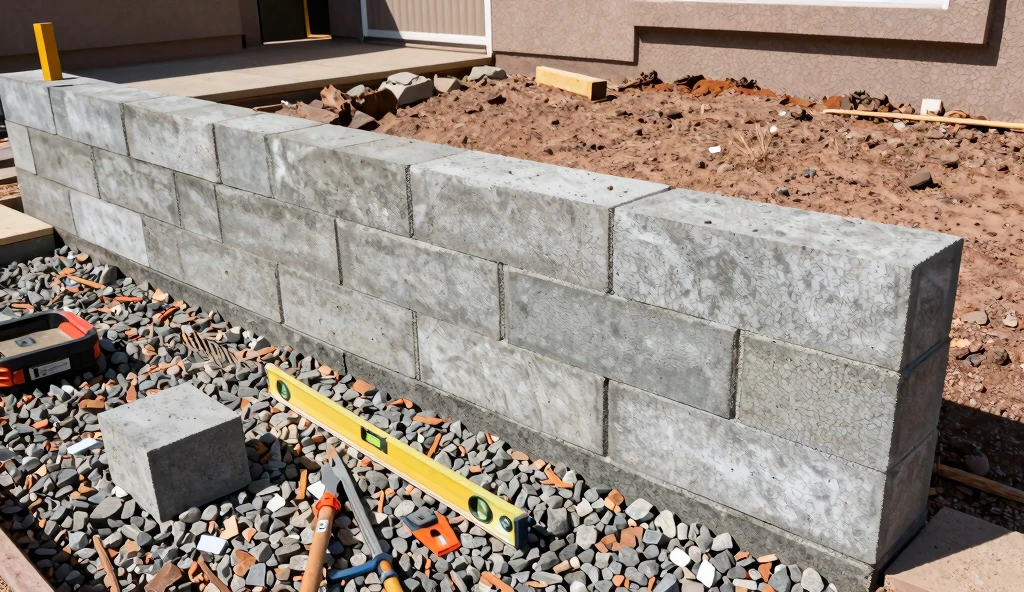
Retaining Wall Ideas That Work for Tucson Yards
Retaining walls don’t just hold back soil; they can genuinely transform your outdoor space. Some of the most popular retaining wall ideas in Tucson involve terraced garden walls that create flat planting areas on sloped lots, perfect for native plants or raised vegetable beds.
Curved walls that follow natural terrain contours blend naturally into desert landscaping. Adding flat capstones on top of block or stone walls creates a built-in seating ledge, a functional outdoor living space with no extra construction required.
How to Build a Retaining Wall: What the Process Involves
Understanding how to build a retaining wall helps you evaluate contractor proposals and spot shortcuts that cause problems later. Every properly built wall starts with excavation, a compacted gravel base, and a first course set below grade for stability.
Each course is then stepped back slightly, called batter to tilt the wall into the slope and increase structural strength. Gravel backfill and drainage pipe are added as the wall rises. For walls under 3 feet on stable ground, experienced DIYers can handle this using standard retaining wall blocks. For anything taller or more complex, professional retaining wall installation by experienced masonry contractors is the right call.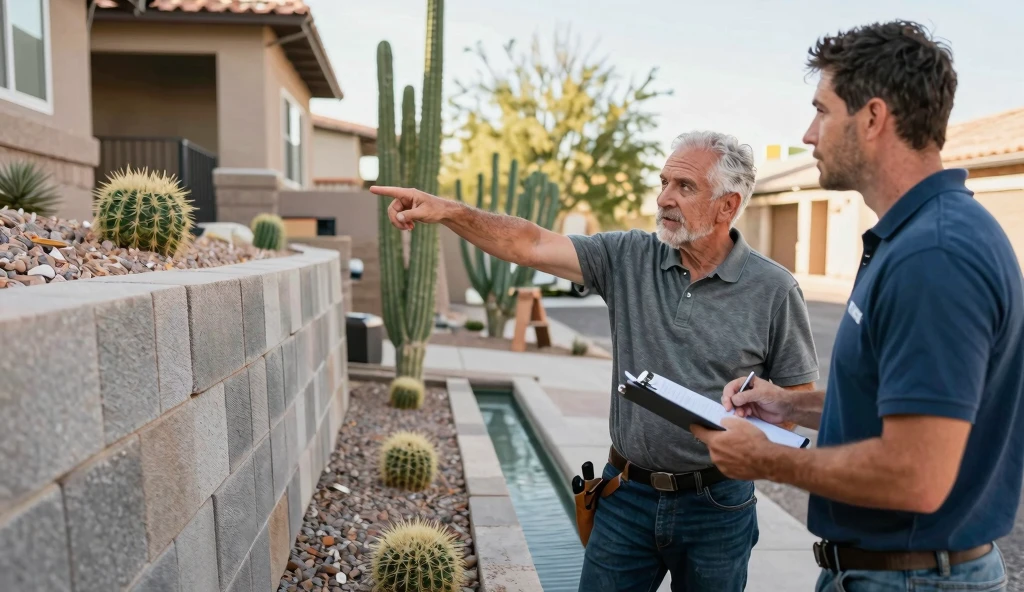
How to Choose a Retaining Wall Contractor in Tucson
A local contractor can explain retaining wall cost Tucson ranges more clearly after checking your yard, slope, soil, and drainage needs. Always get multiple quotes and make sure each one itemizes materials, labour, drainage, and excavation listed separately. Ask every contractor whether they pull permits for walls over 30 inches. Anyone who skips permits is cutting a corner that creates real liability down the road.
Ask specifically about drainage plans. An experienced Tucson contractor will bring it up without being prompted. Look for past project photos showing retaining wall installation in the local area, and check reviews that mention how the walls performed after multiple monsoon seasons, not just on day one. Get a clear retaining wall cost Tucson estimate before you choose materials or start construction.