
Tucson backyards deserve more than plain concrete. If you want a surface that feels like it belongs in the desert, natural, warm, and completely one of a kind, a flagstone patio is one of the smartest choices you can make.
No two flagstone patios look alike. Irregular stone shapes, natural colour variation, and organic layouts create something that feels grown from the ground rather than poured onto it. In a city surrounded by the Sonoran Desert, that natural character fits perfectly. Ready to get started? Explore our professional masonry and hardscape services in Tucson and request a free estimate today.
What Is a Flagstone Patio and Why It Works in Tucson
A flagstone patio is an outdoor surface built from flat, naturally occurring stone, sandstone, limestone, travertine, slate, or locally quarried Arizona flagstone set over a compacted gravel and sand base. Every piece varies in shape and size, giving each installation its own character.
Flagstone is not one specific rock. The term describes for;, any flat stone that splits into usable slabs. That flexibility makes it adaptable across budgets, styles, and site conditions.
In Tucson, natural stone performs exceptionally well. It handles extreme heat without warping, drains naturally during the monsoon season, and blends seamlessly with desert landscaping. Arizona flagstone quarried locally in pink, red, and warm tan tones integrates into the Sonoran Desert environment in a way no manufactured material can match.
How It Differs From Pavers and Concrete
Pavers are uniform manufactured units, sthe ame size same thickness, every time. Flagstone is natural and irregular. That irregularity is its greatest visual strength and the reason skilled installation matters.
Concrete pours as one solid slab. When Tucson’s caliche soil shifts during monsoon season, a concrete slab cracks across the entire surface. A natural stone patio absorbs minor ground movement, and if a stone shifts, you reset that single piece rather than demolishing the whole surface.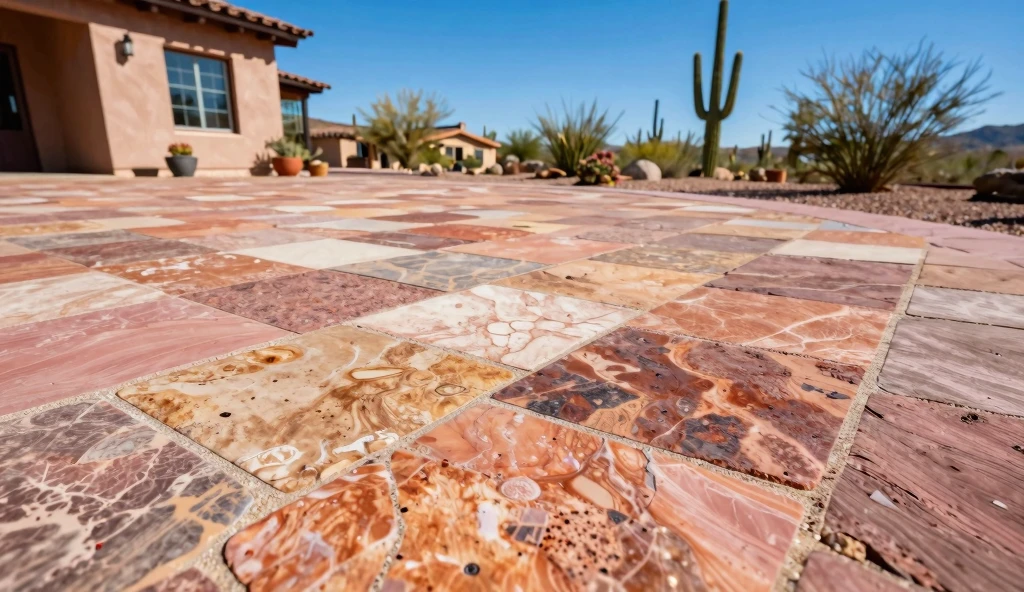
7 Flagstone Patio Ideas That Work in Arizona Desert Homes
Most outdoor design inspiration comes from cooler, wetter climates. Here are seven ideas that genuinely deliver results in Tucson’s desert environment.
Classic Irregular Stone With Desert Landscaping
The most popular approach uses irregular Arizona flagstone in warm tan and terracotta tones set in an organic pattern. Saguaro cactus, palo verde trees, desert marigold, and brittlebush around the perimeter make the patio feel like a natural extension of the yard.
This style works with virtually any Tucson home, traditional adobe, modern stucco, or Southwestern ranch.
Flagstone Patio With Fire Pit
Tucson winters are mild by day and cold by night, perfect fire pit weather from October through March. A natural stone surface with a built-in fire area extends outdoor use well beyond summer and creates the most used gathering spot on the property.
Stone handles fire heat better than most materials. A masonry ring in matching Arizona stone creates a cohesive, permanent look at a fraction of the cost of a full outdoor kitchen.
Stepping Stones Through Decomposed Granite
Large stone pieces as stepping stones through a bed of decomposed granite is one of the most distinctly desert-appropriate combinations available. The DG fills the space between stones naturally, provides excellent drainage, and keeps costs lower than a full stone surface.
This combination works perfectly with the desert landscaping aesthetic popular across Tucson’s established neighbourhoods.
Mortar-Set Stone for a Formal Look
Dry-laid installation has an organic, rustic quality. Mortar-set stone looks cleaner and more formal, pieces locked permanently in place with tight grout joints and a precise finished result.
For Tucson homes with modern architecture or formal landscaping, mortar-set delivers a more refined aesthetic that holds up without any movement or weed intrusion over time.
Stone Patio With Seating Wall
A low masonry seating wall along one or two edges of a stone patio defines the outdoor room, reduces the need for extra furniture, and creates a finished perimeter that anchors the space visually.
A seating wall also solves the grade problem on many Tucson lots. The wall retains the slope on the downhill side, while the stone surface stays level above it.
Raised Flagstone Patio on a Sloped Lot
Many Tucson properties, especially in the foothills, have grades that make a flat patio impossible without major earthwork. A raised stone patio built into the slope creates a distinct outdoor level and often produces the most visually interesting result on the property.
Raised installations require retaining structures along the downhill edge. The retaining wall cost Tucson guide explains how those structures affect your total project budget.
Stone Walkway and Patio Combination
A natural stone walkway from the back door to the main patio area creates a sense of arrival and connects different yard zones. Using the same stone throughout creates visual continuity across the entire outdoor space, and costs significantly less than paving everything because planted desert areas fill most of the surrounding ground.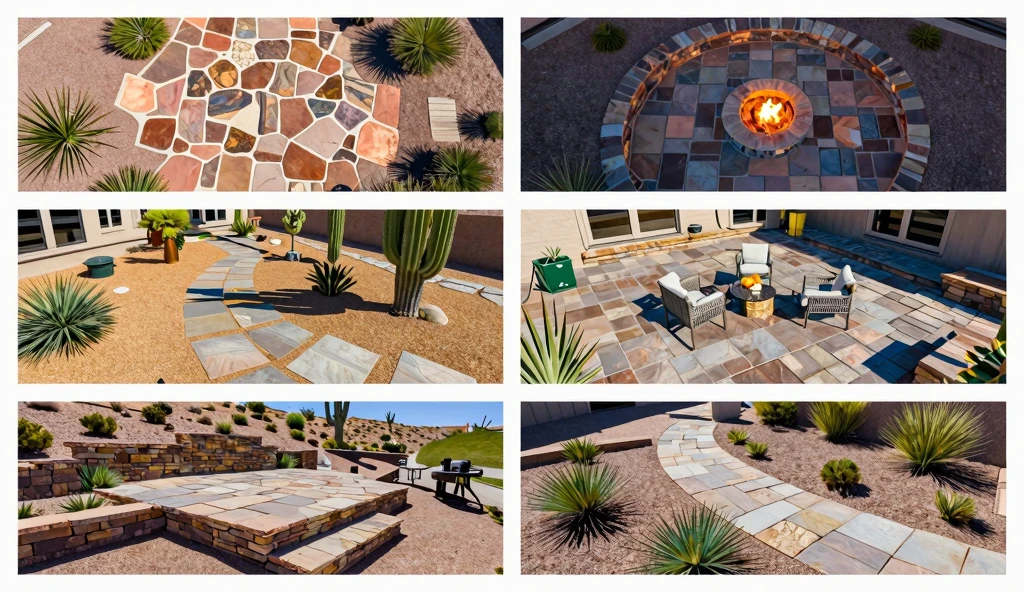
Flagstone Patio Cost in Tucson: Honest Numbers
Here are realistic Tucson-area figures based on current material and labour rates. Prices vary by stone type, installation method, site conditions, and project size. Always confirm current pricing with your contractor.
Cost by Installation Method
Method | Cost Per Sq Ft | Total for 200 Sq Ft |
Dry-Laid | $15 – $32 | $3,000 – $6,400 |
Mortar-Set | $20 – $42 | $4,000 – $8,400 |
Concrete-Set | $23 – $45 | $4,600 – $9,000 |
Cost by Project Size
Patio Size | Sq Ft | Installed Cost |
|---|---|---|
12×12 | 144 | $2,200 – $6,500 |
16×16 | 256 | $3,800 – $11,500 |
20×20 | 400 | $6,000 – $18,000 |
What Drives the Price Higher
Three things consistently push Tucson projects above initial estimates:
- Caliche removal, Tucson’s hardpan soil, adds excavation time and equipment cost when it sits close to the surface
- Stone selection, locally quarried Arizona flagstone costs less than imported travertine or bluestone from distant suppliers.
- Installation method, Mortar-set and concrete-set builds cost 30–40% more than dry-laid. Always clarify which method a quote covers before comparing bids.
3 Installation Method: Which One Is Right for You
Dry-Laid Flagstone Patio
Stones set on compacted gravel and sand without mortar. Joints filled with polymeric sand or pea gravel. The most common method for Tucson residential projects.
It costs less, drains better, and allows easier repairs. The tradeoff, stones can shift slightly after heavy monsoon events if base preparation was inadequate.
Mortar-Set Flagstone Patio
Stones bedded in mortar over a gravel base or existing concrete. Joints filled with grout and locked permanently. No shifting, no weeds, no movement.
It looks cleaner and more formal than dry-laid and costs 25–35% more. Repairs are harder; removing a cracked mortar-set stone requires breaking the bond, which takes significantly more labour.
Concrete-Set Flagstone Patio
Most permanent and most expensive. Stones set on a poured concrete slab base. Nothing moves. For most Tucson residential patios, mortar-set achieves the same result at a lower cost. Concrete-set is worth the extra expense only when sub-base conditions are particularly challenging.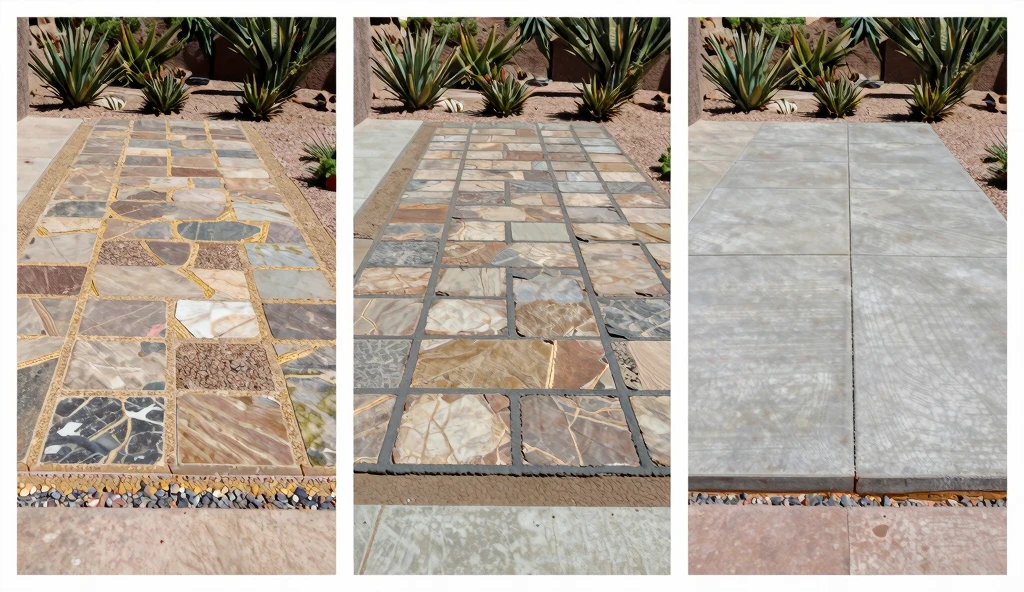
Best Flagstone Types for Tucson’s Desert Environment
Stone Type | Heat Performance | Durability | Cost | Best For |
Arizona Flagstone | Excellent | Very Good | $ | Desert-integrated patios |
Sandstone | Good | Good | $ – $$ | Budget natural look |
Limestone | Good | Good | $$ | Warm neutral tones |
Travertine | Outstanding | Excellent | $$$ | Premium patios, barefoot use |
Slate | Fair, holds heat | Excellent | $$ | Shaded areas, formal designs |
Arizona Flagstone is quarried locally and comes in warm pink, red, tan, and rust tones that match the desert environment naturally. Affordable, widely available, and adapted to the same heat and UV conditions your patio faces every day. For most Tucson homeowners, this is the right starting point.
Travertine stays cooler underfoot than any other common paver material in direct Arizona sun; its natural porosity makes a meaningful difference during peak summer heat. It costs two to three times more than Arizona flagstone but earns that premium with outstanding comfort and a sophisticated look.
Slate works beautifully in shaded areas and contemporary designs. Avoid dark slate in full afternoon sun; it absorbs and holds heat far longer than lighter stone options.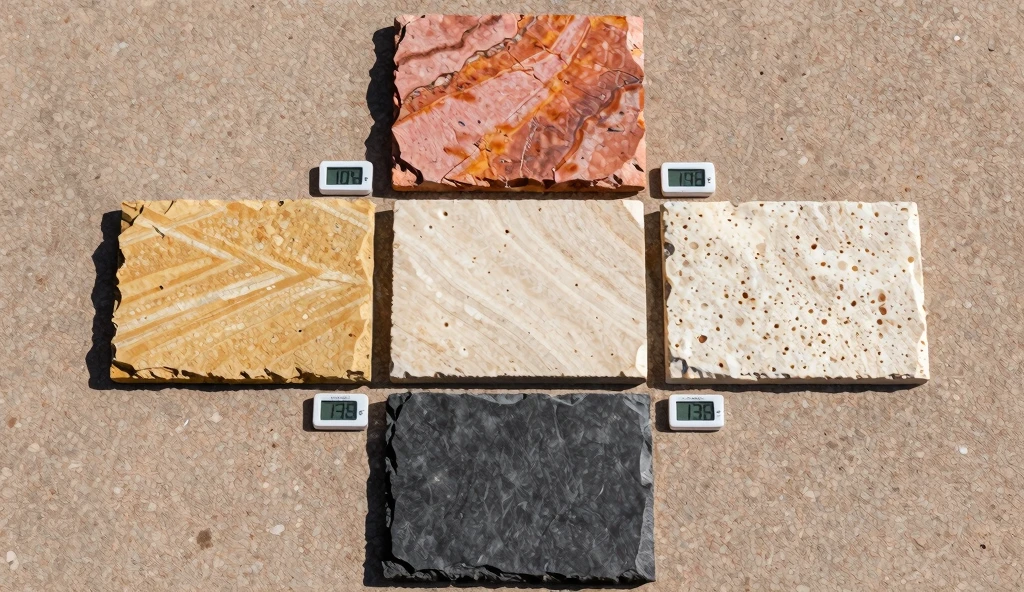
How a Flagstone Patio Is Installed, Step by Step
Understanding the process helps you evaluate quotes accurately and ask the right questions before signing anything.
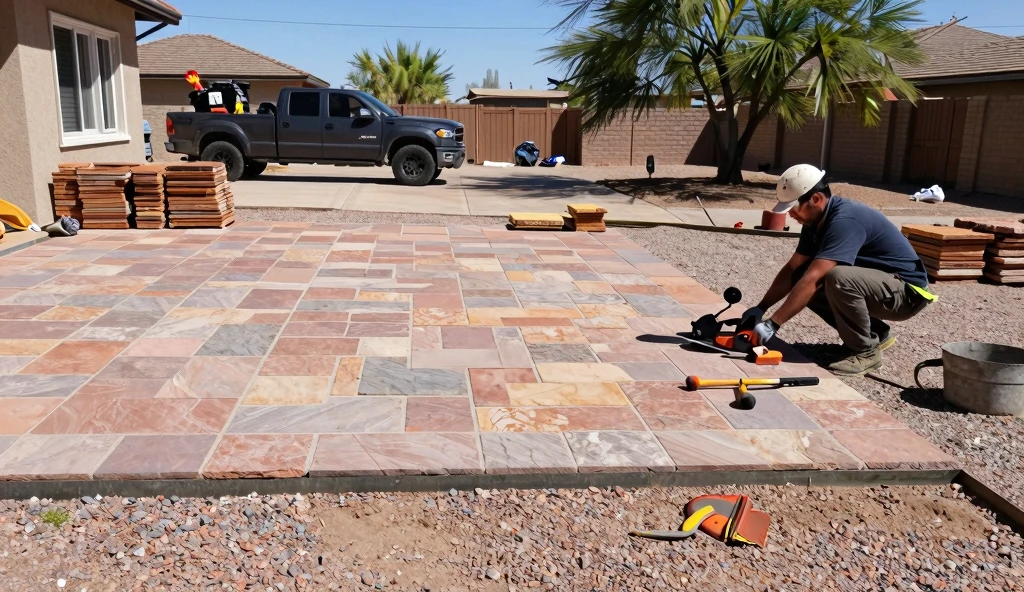
Layout and Drainage Planning The perimeter is staked, and a drainage slope is set, typically 1 inch of drop per 8 linear feet, directed away from the house. Monsoon rain in Tucson can deliver 2 inches in under an hour. Getting this slope right from day one is not optional.
Excavation Depth goes from 6 to 9 inches, depending on the installation method. In Tucson, caliche commonly appears within the first few inches of digging. Any contractor who does not mention this in a local quote is not accounting for real Arizona conditions.
Base Preparation: Four inches of compacted crushed aggregate goes in first, added in layers and compacted between each pass. This is the structural foundation of the entire project. Cutting corners here is the primary reason patios fail early in desert climates.
Weed Barrier Commercial-grade woven landscape fabric goes down before the sand layer. Thin plastic sheeting from a big-box store fails within two seasons under Tucson’s UV intensity. Only commercial-grade fabric lasts.
Stone Fitting: Each piece is selected, trial-fitted, and cut as needed before permanent placement. This is the most time-intensive stage, fitting irregular natural pieces together while maintaining consistent joints and a level surface, which requires genuine skill and patience.
Jointing, Polymeric sand swept into all joints, compacted, and activated with water. Regular sand washes out completely in one Tucson monsoon season. Polymeric sand is the only right choice for this climate.
Sealing: A penetrating stone sealer is applied after full curing. In Tucson’s UV intensity, unsealed sandstone and limestone show visible weathering within two to three Arizona summers. Always use matte or satin finish; glossy sealers make natural stone dangerously slippery when wet.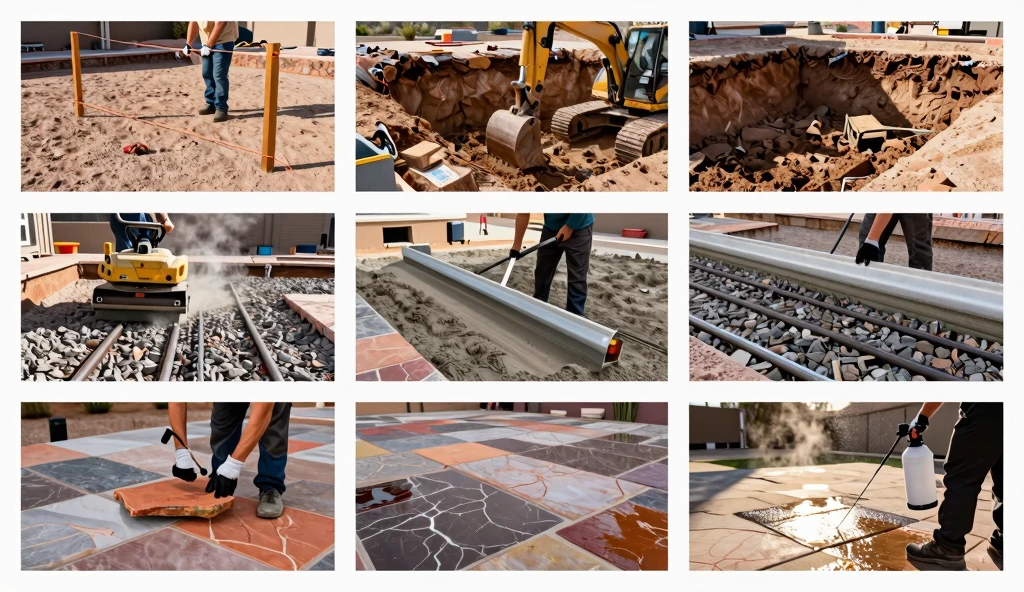
Flagstone Patio Maintenance in Tucson’s Desert Climate
A properly built natural stone patio needs very little ongoing care, but basic maintenance keeps it looking sharp for decades.
Sealing is the highest-impact step. A quality penetrating sealant protects natural colour, repels organic staining from monsoon debris, and slows UV degradation. Reapply every two to five years, depending on stone type and sun exposure. Sandstone and limestone need more frequent attention than travertine or slate.
After the monsoon season, inspect joints for sand loss and check perimeter edges for erosion. Any shifted stones in a dry-laid installation can be reset in under an hour: lift the stone, re-level the sand bed, and replace. This is one of the genuine long-term advantages natural stone has over concrete.
Routine Care: sweep occasionally, rinse after dusty monsoon events, and inspect joints once a year. That is genuinely all most Tucson flagstone patios need between sealings.